What to Expect During Your Kilimanjaro Climb and How Climbers Stay Nourished and Hydrated at High Altitude
Climbing Mount Kilimanjaro is not only a physical and mental challenge but also an adventure that requires proper nutrition and hydration. At 5,895 meters above sea level, your body works harder than usual, burning more energy while adjusting to high altitude conditions. This makes food and water essential components of a successful Kilimanjaro trek.
Many first-time climbers are surprised to discover that the meals prepared on the mountain are both nutritious and surprisingly delicious. Professional trekking teams, including experienced mountain chefs and porters, work behind the scenes to ensure climbers receive balanced meals that help maintain energy levels throughout the journey.
At Kili Worldborn Safaris, we understand that good food, clean water, and proper nutrition play a critical role in helping climbers reach the summit safely and comfortably. This guide explains what you can expect regarding food and water during your Kilimanjaro adventure.
The Importance of Nutrition During a Kilimanjaro Climb
Climbing Mount Kilimanjaro requires a significant amount of energy. Each day involves several hours of trekking across varying terrain and increasing altitude. As your body works harder to adapt to thinner air, it also burns more calories than usual.
Proper nutrition helps maintain strength, improve endurance, and support the body’s ability to acclimatize to higher elevations. Eating regularly during the climb helps prevent fatigue, dizziness, and loss of energy, which are common symptoms associated with altitude.
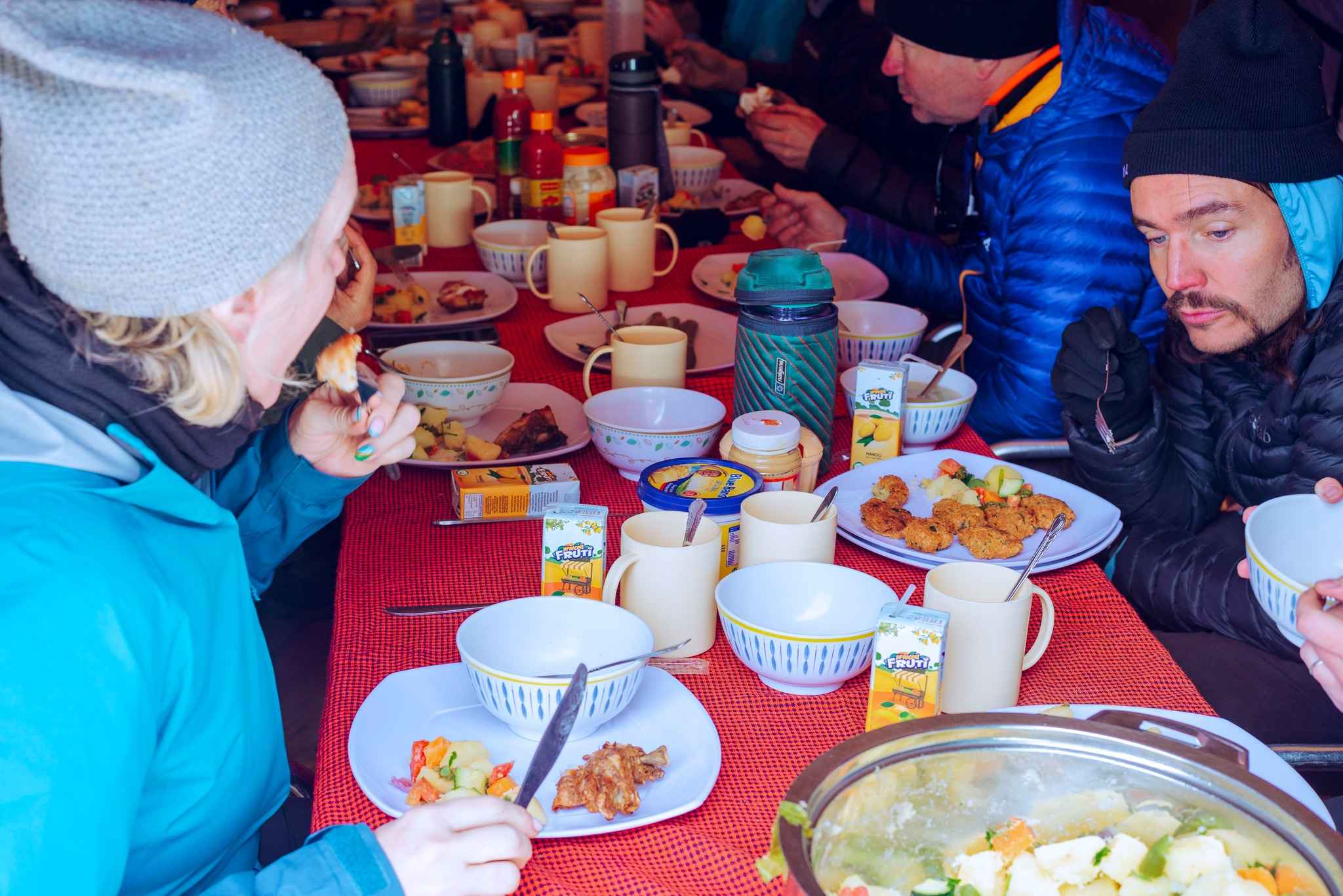
Because appetite can sometimes decrease at high altitude, Kilimanjaro meals are designed to be both appealing and energy-rich. Warm, freshly prepared meals help climbers stay comfortable and motivated throughout the trek.
Who Prepares the Food on Kilimanjaro?
One of the most impressive aspects of a Kilimanjaro climb is the dedicated support team that accompanies each group. Alongside guides and porters, most trekking teams include professional mountain chefs whose job is to prepare all meals during the climb.
These cooks are experienced in preparing nutritious meals in high-altitude conditions using portable cooking equipment. They travel ahead of the group with the porters, ensuring that meals are ready by the time climbers arrive at camp after a long day of hiking.
Despite the remote mountain environment, the quality and variety of meals are often far better than many climbers expect.
Typical Meals Served on Mount Kilimanjaro
Meals on Kilimanjaro are usually served three times a day, with additional snacks provided along the way. The goal is to provide a balanced diet that includes carbohydrates for energy, proteins for muscle recovery, and fruits and vegetables for vitamins and minerals.
Breakfast is usually hearty and designed to prepare climbers for the day’s trek. A typical breakfast may include eggs, porridge, pancakes, toast, fresh fruit, sausages, and hot drinks such as tea, coffee, or hot chocolate. This warm meal provides the energy needed for the morning hike.
Lunch is often served either on the trail as a packed meal or back at camp depending on the route and schedule. Packed lunches may include sandwiches, boiled eggs, fruit, juice, and snacks. On shorter trekking days, a freshly prepared hot lunch may be served at camp.
Dinner is typically the main meal of the day. After a long hike, climbers are welcomed with a hot and satisfying dinner that may include soup, rice or pasta dishes, vegetables, chicken or beef, and sometimes even desserts such as fruit or pancakes.
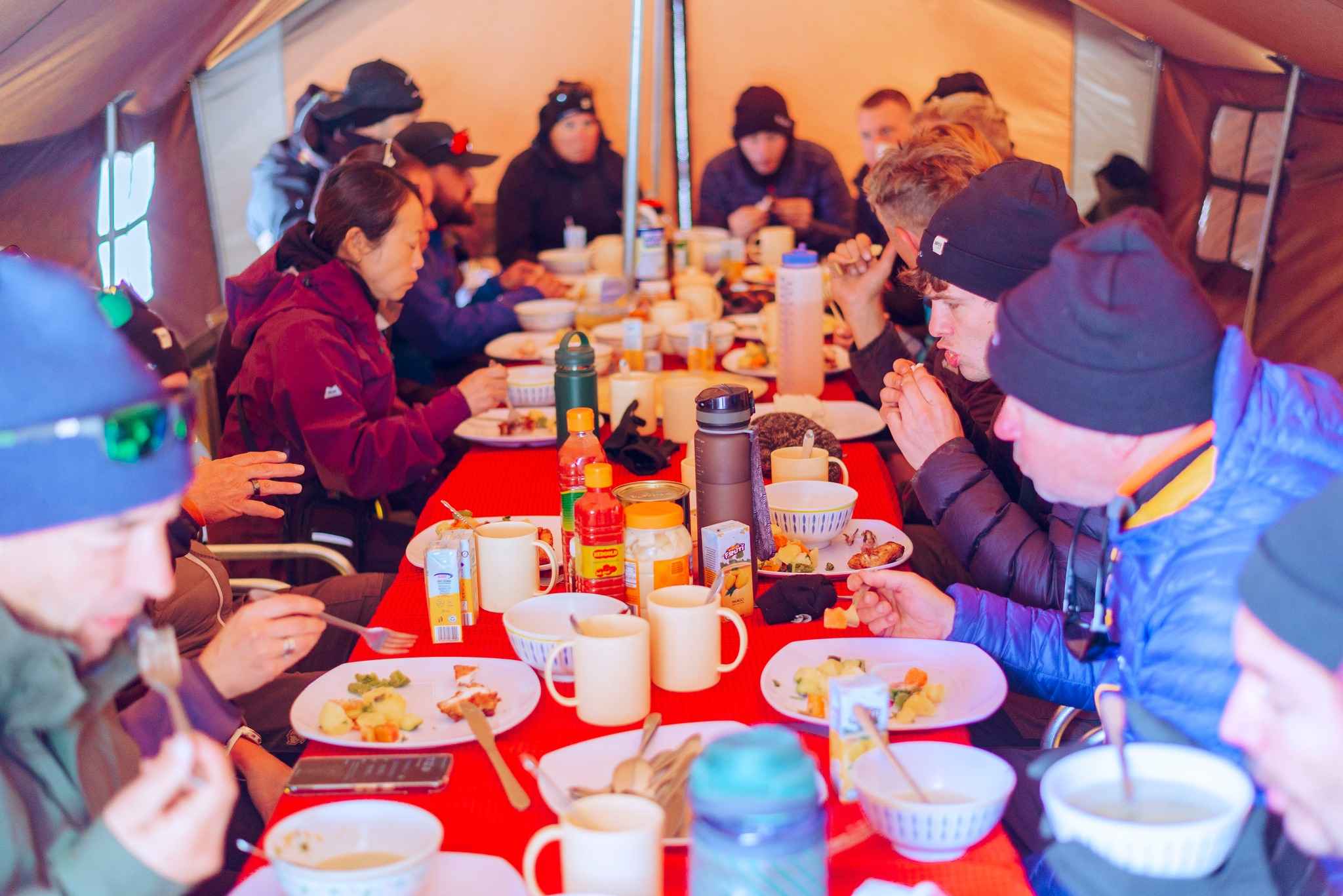
Hot soup is commonly served before the main course because it helps warm the body and maintain hydration, especially at higher altitudes.
Special Dietary Requirements
Most professional Kilimanjaro operators can accommodate a variety of dietary needs. Vegetarian, vegan, gluten-free, and other special diets can usually be arranged with advance notice.
Climbers should inform their tour operator about any dietary restrictions before the trek so the mountain chefs can prepare appropriate meals. Providing this information early ensures that sufficient ingredients are packed for the journey.
At Kili Worldborn Safaris, we carefully plan menus to meet different dietary requirements while maintaining balanced nutrition during the climb.
Snacks and Energy Foods During the Trek
In addition to regular meals, climbers are encouraged to bring personal snacks to eat during hiking breaks. Energy bars, nuts, chocolate, dried fruits, and protein snacks are popular choices because they provide quick energy while trekking.
Guides often recommend eating small amounts regularly throughout the day to maintain energy levels and prevent fatigue. Even when appetite decreases at high altitude, consuming small snacks can help keep the body fueled.
Having your favorite snacks can also boost morale during challenging parts of the climb, especially during the long summit night.
Water Sources on Mount Kilimanjaro
Staying hydrated is one of the most important aspects of climbing Kilimanjaro. Guides typically recommend drinking at least three to four liters of water per day to help the body adapt to high altitude.
Water used during the trek is collected from natural mountain streams located along the climbing routes. These streams originate from Kilimanjaro’s glaciers and rainfall, providing fresh mountain water.
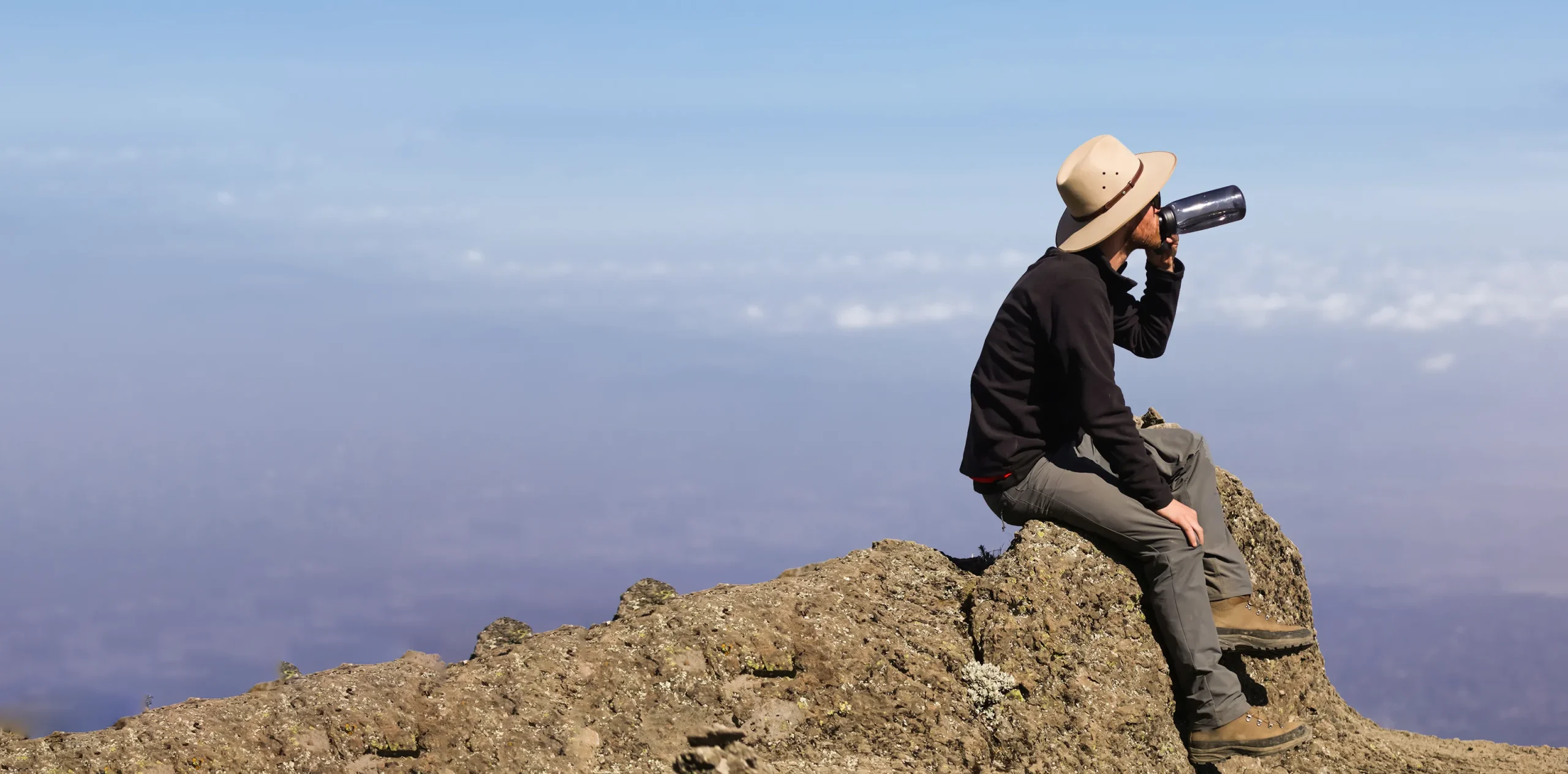
However, even though the water sources are natural, the water must always be purified before drinking to ensure safety.
How Water Is Purified on Kilimanjaro
Professional trekking teams use several methods to make sure water is safe for drinking. The most common method is boiling the water, which effectively eliminates harmful bacteria and microorganisms.
Some operators may also use water purification tablets or filtration systems as an additional safety measure. Once treated, the clean water is stored in containers and distributed to climbers for daily use.
Each morning, climbers fill their water bottles or hydration systems with purified water before beginning the day’s trek.
Hot Drinks and Hydration Support
In addition to drinking water, climbers are often served hot beverages at camp. Tea, coffee, hot chocolate, and sometimes warm fruit drinks are available during breakfast and dinner.
Hot drinks are especially comforting in the cold mountain environment and help maintain body warmth while contributing to daily hydration needs.
Some guides also provide herbal teas that can help soothe sore throats or dry airways caused by the cold, dry mountain air.
Hygiene and Food Safety on the Mountain
Food safety and hygiene are taken very seriously on Kilimanjaro climbs. Professional trekking teams follow strict cleanliness standards when preparing meals to ensure the health of climbers.
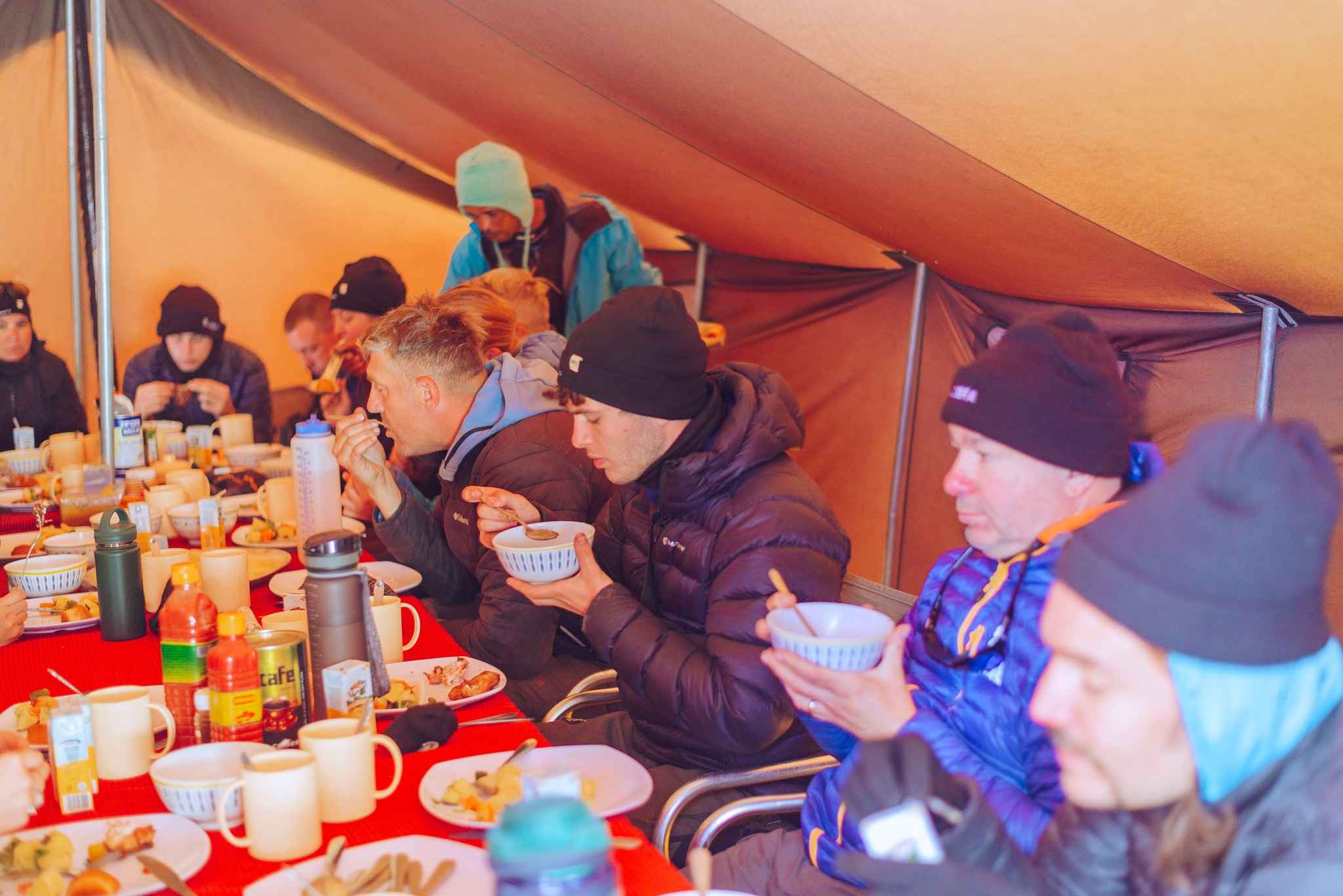
Cooks use clean cooking equipment and carefully handle ingredients while preparing meals. Before each meal, climbers are usually provided with warm water and soap to wash their hands, helping prevent illness during the trek.
Maintaining proper hygiene is important in remote environments where medical facilities are not easily accessible.
Food as Motivation During the Climb
Beyond its nutritional value, food also plays an important psychological role during the Kilimanjaro climb. After hours of trekking through changing landscapes, arriving at camp to enjoy a warm meal with fellow climbers becomes a rewarding and comforting part of the experience.
Sharing meals together also creates a sense of camaraderie among climbers, guides, and support staff. These moments often become some of the most memorable parts of the journey.
Enjoying Great Food Even at High Altitude
Many climbers initially worry about what food will be like on Mount Kilimanjaro, but they are often pleasantly surprised by the quality and variety of meals prepared on the mountain. Thanks to experienced chefs and well-organized trekking teams, climbers can enjoy warm, nourishing meals throughout the entire adventure.
With proper nutrition and hydration, climbers are better equipped to maintain energy, adapt to altitude, and stay motivated during the trek.
At Kili Worldborn Safaris, we believe that great food and safe drinking water are essential elements of a successful Kilimanjaro climb. Our experienced mountain teams ensure that every climber receives nutritious meals, clean drinking water, and the support needed to make the journey to the summit both safe and unforgettable.